
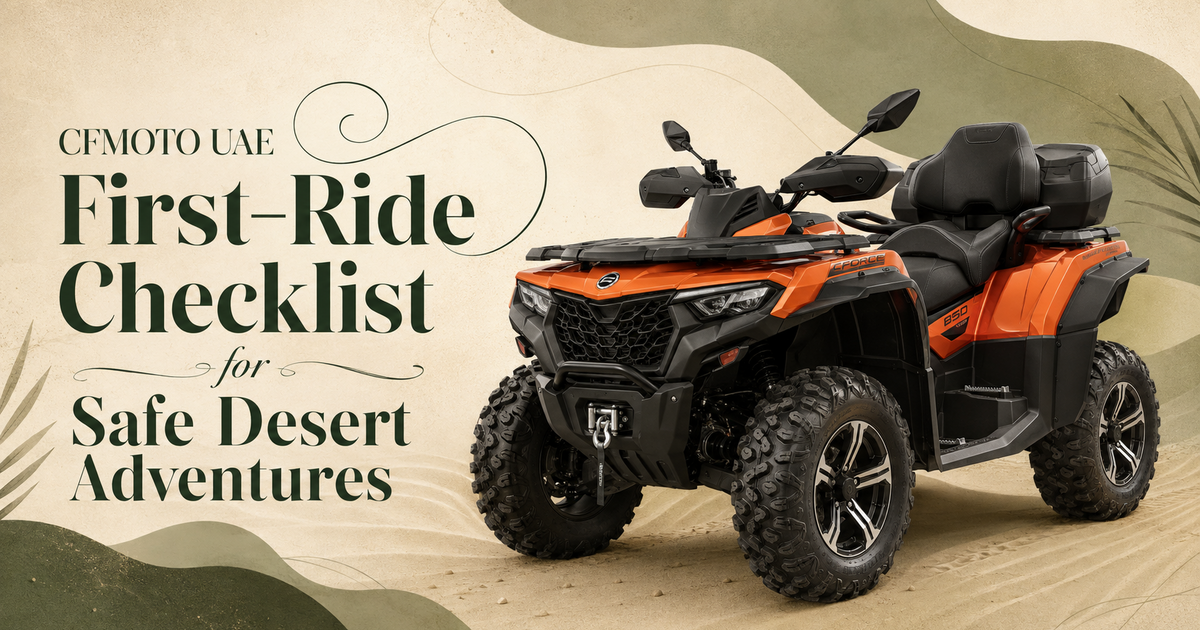
Owning an all-terrain vehicle opens the door to a different kind of weekend in the Emirates. Desert tracks, private off-road areas and long stretches of mixed terrain can all feel more accessible when the machine is chosen and prepared correctly. However, a powerful ATV should never be treated like a simple ride-on toy. A successful first outing begins before the engine starts.
This practical checklist is designed for riders exploring CFMOTO UAE options and planning their first serious off-road experience. It focuses on preparation, responsible use and the small decisions that can make a ride more controlled and enjoyable.
Choose a Model That Matches the Rider
Start by being honest about experience, intended terrain and typical ride length. A new rider does not automatically need the biggest engine in the range. Manageable power, predictable control and a comfortable riding position may be more valuable while learning throttle response, braking and body movement.
The range extends from an electric entry model to full-size CFORCE touring and overland ATVs. Compare the power source, dimensions, seat height, steering support, drive modes, ground clearance and carrying ability. A machine for controlled practice has a different purpose from one built for loaded desert touring.
Confirm Where You Are Allowed to Ride
Never assume an ATV can be used on every road, beach or open area. Check current access, registration, licensing and safety rules with the relevant UAE authority, and confirm that the planned route permits powered off-road vehicles.
For a first trip, select a familiar and legally accessible area rather than attempting a remote route. Ride with experienced companions where possible, share the route with someone who is not travelling with you and avoid setting off without reliable communication.
Perform a Pre-Ride Inspection
A five-minute check can reveal problems that would become serious away from the starting point. Walk around the CFMOTO ATV and inspect:
- Tyres for cuts, low pressure, uneven wear or embedded objects
- Brakes for consistent response and a firm feel
- Steering for smooth movement without unusual looseness
- Lights, indicators and horn where fitted
- Visible cables, hoses and fasteners for damage or movement
- Fuel, oil, coolant or battery status according to the model
- Racks, storage boxes and permitted cargo for secure attachment
Use the tyre pressure and fluid specifications stated in the owner’s manual. Desert conditions do not justify guessing. An incorrect setup can change steering, grip, braking and tyre behaviour.
Wear Proper Protective Equipment
A helmet should fit correctly and be designed for motorised riding. Add eye protection, gloves, long sleeves, long trousers and sturdy over-the-ankle footwear. Protective gear remains important even during a short ride because loose stones, branches, heat and unexpected terrain changes can cause injury.
Carry water, sun protection and a compact first-aid kit. In hotter months, plan around the temperature and never ignore signs of heat exhaustion.
Learn the Controls Before Entering Difficult Terrain
Study the owner’s manual and identify the throttle, brakes, gear selector, parking brake, drive controls and display warnings. If the machine provides steering assistance, selectable four-wheel drive or different power modes, understand when each feature should be used before relying on it.
Practise starting, stopping, wide turns and low-speed movement on a suitable flat surface. Avoid sudden acceleration, sharp steering and steep slopes until the controls feel familiar.
Plan for Distance, Terrain and Recovery
Desert routes can change quickly. Soft sand may increase engine load, while rocks, ruts and slopes require lower speed and careful line choice. Build the route around the least experienced rider in the group.
Carry recovery and emergency equipment that you know how to use, such as a tyre repair solution, pressure gauge, basic tools, tow strap, navigation backup and securely stored water. A fitted winch does not replace route judgement or recovery knowledge.
Respect Passenger and Cargo Limits
Only carry a passenger when the exact model is designed and approved for two people. A long seat or rear rack does not automatically make an ATV suitable for a second rider. Follow the stated load limits and keep approved cargo balanced and secured.
Extra weight affects acceleration, steering and braking distance. Riders should slow down, leave more stopping room and avoid aggressive manoeuvres when carrying permitted gear or a passenger.
Clean and Inspect the ATV After Riding
Let hot components cool, then remove dust and debris using approved methods. Avoid forcing high-pressure water into electrical connections, bearings, vents or the charging area.
Check the tyres, brakes and underbody for new damage. Warning lights, leaks, unusual smells or performance changes require qualified attention. Follow the model-specific maintenance schedule.
Compare CFMOTO Options with Reliable Support
Buying from a retailer that clearly presents the available models makes comparison easier. ToysUAE lists CFMOTO CFORCE choices for different experience levels and uses, allowing buyers to review electric, touring, performance and overland-style options in one place.
Final Thoughts
A memorable first ride depends less on maximum speed and more on preparation. Select the right CFMOTO model, confirm the route, inspect the machine, wear suitable protection and build experience gradually. Good habits formed on the first outing can support safer decisions throughout ownership.


