
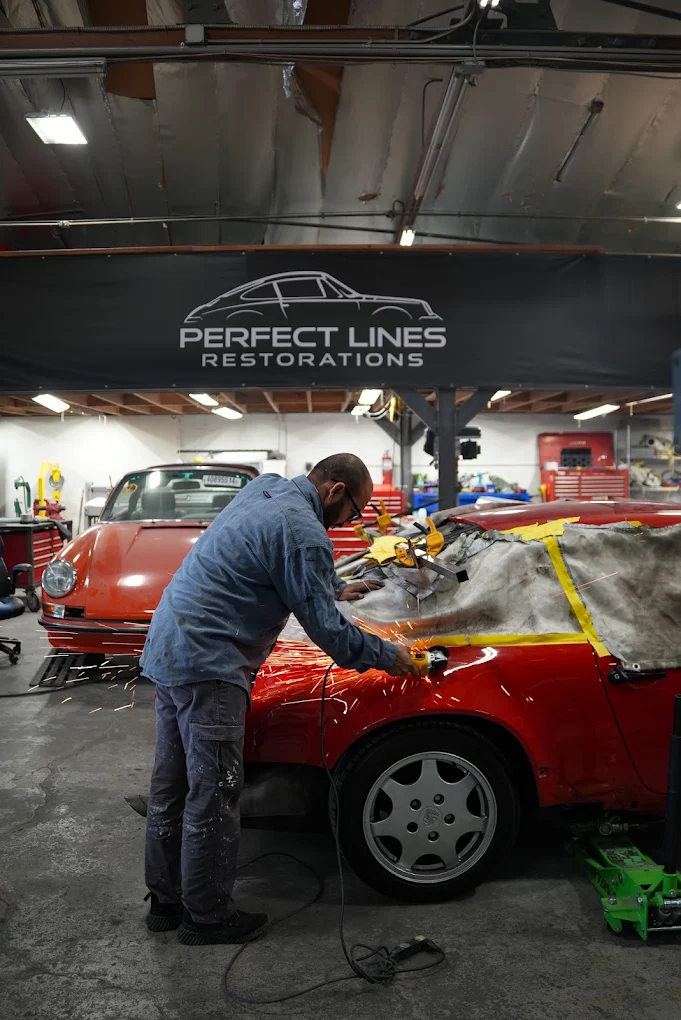
Whether you’re restoring a classic 356, an air-cooled 911, a 944, or another iconic model, understanding current restoration trends can help you make better decisions before beginning a project.
One thing I’ve noticed over the years is that many owners initially focus almost entirely on horsepower or paint color. As the project progresses, they often realize that thoughtful planning, careful craftsmanship, and preserving the car’s character matter far more than flashy upgrades.
Factory-Correct Restorations Continue to Gain Appreciation
One of the strongest trends is the growing appreciation for factory-correct restorations.
Rather than heavily modifying every aspect of the vehicle, many enthusiasts now aim to preserve the original engineering while restoring worn or damaged components to factory specifications.
Attention is given to details such as:
- Original paint colors
- Factory-style upholstery
- Correct trim pieces
- Authentic hardware
- Proper finishes
- Original badging
These details may seem minor individually, but together they contribute to a restoration that reflects the vehicle’s heritage.
Restomods Are Becoming More Refined
Not every owner wants complete originality.
Another growing trend involves carefully planned restomods—classic Porsche models updated with modern technology while respecting their original appearance.
Common upgrades include:
- Modern braking systems
- Improved suspension
- Electronic fuel injection
- Upgraded lighting
- Modern climate control
- Enhanced electrical systems
Rather than dramatically changing the car, these modifications often improve reliability and drivability without sacrificing its classic personality.
The best restomods feel like natural evolutions of the original design.
Metal Restoration Is Receiving More Attention
Experienced restoration professionals increasingly emphasize preserving original body panels whenever practical.
Instead of replacing every damaged section, skilled fabricators often repair existing metal through careful shaping and welding.
Benefits include:
- Better panel fit
- Greater authenticity
- Improved structural continuity
- Preservation of original craftsmanship
This approach requires patience, but it often produces a more satisfying long-term result.
Insider Tip
If your Porsche requires extensive body repairs, ask how much of the original metal can realistically be saved. Shops with strong fabrication skills frequently restore panels that others would immediately replace, helping preserve the vehicle’s originality whenever possible.
Paint Quality Is Taking Priority Over Flashy Colors
While custom paint remains popular, many restorations now focus on period-correct colors with exceptionally high-quality finishing.
Owners increasingly appreciate:
- Accurate factory color reproduction
- Consistent panel alignment
- Smooth reflections
- Correct texture
- Durable protective coatings
The emphasis has shifted from standing out through unusual colors to showcasing craftsmanship through flawless execution.
Original Interior Details Are Making a Comeback
The interior has become one of the most carefully restored areas of classic Porsches.
Enthusiasts now pay close attention to:
- Factory stitching patterns
- Correct seat materials
- Original steering wheels
- Period-correct gauges
- Authentic carpeting
- Matching interior trim
These details create an experience that feels true to the era rather than simply looking attractive in photographs.
Digital Documentation Is Becoming Standard Practice
Professional restoration shops increasingly document projects from beginning to end.
Typical records include:
- Initial inspections
- Rust discovery
- Metal repairs
- Paint preparation
- Mechanical rebuilding
- Final assembly
This documentation provides valuable reference material for future maintenance and demonstrates the level of craftsmanship invested throughout the project.
For collectors, detailed restoration records can also strengthen confidence in the vehicle’s history.
Reliability Upgrades Are More Thoughtfully Integrated
Owners are increasingly interested in making classic Porsches enjoyable to drive regularly.
Rather than pursuing maximum performance, many choose carefully selected upgrades that improve dependability.
Examples include:
- Improved cooling systems
- Modern ignition components
- Refined suspension bushings
- Updated fuel delivery
- Better electrical reliability
These changes often remain nearly invisible while making the vehicle significantly more practical for everyday driving.
Attention to Underside Restoration Is Increasing
Years ago, restoration discussions focused mainly on visible bodywork.
Today, many enthusiasts place equal importance on areas rarely seen.
These include:
- Suspension components
- Floor pans
- Wheel wells
- Brake lines
- Fuel lines
- Protective underbody coatings
A meticulously restored underside often reflects the overall quality of the entire project.
Experienced builders know that genuine craftsmanship extends beyond what appears in photographs.
Insider Tip
When evaluating a completed restoration, spend a few minutes examining the underside or engine compartment if possible. Consistent finishes, clean hardware installation, and organized routing of wiring and hoses usually indicate the same level of care throughout the vehicle.
Balancing Originality with Usability
One interesting trend is that owners no longer feel obligated to choose between originality and practicality.
Instead, many projects combine:
- Factory appearance
- Improved reliability
- Comfortable driving characteristics
- Modern safety enhancements where appropriate
The result is a Porsche that remains faithful to its heritage while fitting naturally into today’s driving conditions.
Learning Through Professional Restoration Resources
As restoration techniques continue to evolve, many enthusiasts are taking advantage of educational resources published by experienced professionals. Reading about body restoration, collision repair, paint refinement, fabrication, and vehicle preservation helps owners better understand the decisions involved before work begins. For additional restoration insights, you can explore the articles and resources available at perfect lines restoration, where experienced professionals share practical knowledge based on real restoration projects.
Patience Is Once Again Valued
Perhaps the most encouraging trend is a renewed appreciation for patience.
Quality Porsche restoration has never been fast.
Experienced builders understand that proper metal fabrication, paint preparation, mechanical rebuilding, and careful assembly require time.
Owners who recognize this often experience smoother projects because expectations remain aligned with the level of craftsmanship required.
Rushing a restoration rarely produces lasting satisfaction.
Preservation Is Becoming More Important Than Replacement
Whenever practical, restoration professionals increasingly preserve original components rather than automatically replacing them.
Examples include:
- Reconditioning trim
- Restoring original gauges
- Refinishing factory wheels
- Rebuilding mechanical components
- Preserving factory hardware
Maintaining these authentic elements often strengthens the vehicle’s historical integrity while celebrating Porsche’s original engineering.
Final Thoughts
Porsche restoration continues to evolve, but the core principles remain remarkably consistent. Precision, patience, and respect for the vehicle’s heritage continue to define outstanding craftsmanship. Modern trends focus less on dramatic modifications and more on thoughtful improvements that preserve the character of these iconic automobiles while enhancing reliability and long-term enjoyment.
Also read for more information so click here.

