
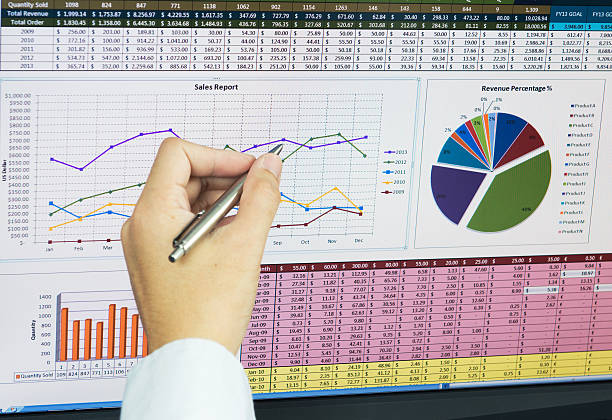
Writing MATLAB Programs for Marketing Data Analysis
Marketing has evolved from intuition-driven decisions to data-powered strategies, and MATLAB has become a valuable tool in this transformation. Writing MATLAB programs for marketing data analysis allows analysts, data scientists, and business professionals to convert raw customer and campaign data into actionable insights. Instead of relying on fragmented spreadsheets or static dashboards, MATLAB enables structured computation, advanced modeling, and visualization in a single environment.
In today’s AI-first search and analytics landscape, businesses are no longer asking whether data matters, but how quickly and accurately it can be interpreted. MATLAB bridges this gap by offering a programming framework that is both mathematically robust and practically adaptable for marketing use cases such as customer segmentation, predictive modeling, and performance optimization.
This article explores how MATLAB programs are designed for marketing analytics, why they matter in modern decision-making, and how they align with the future of intelligent, AI-supported search systems.
Why MATLAB is Used in Marketing Data Analysis
MATLAB is widely recognized for its strength in numerical computing and algorithm development, but its relevance in marketing analytics has grown significantly with the rise of data-driven business ecosystems. Marketing data is often messy, high-volume, and multidimensional, requiring tools that can handle computation and visualization simultaneously.
When writing MATLAB programs for marketing data analysis, professionals benefit from its ability to process large datasets efficiently while maintaining clarity in logic and structure. This is especially useful when analyzing customer behavior trends, conversion funnels, or advertising performance across multiple channels.
Unlike traditional tools that separate computation from visualization, MATLAB integrates both, allowing marketers to instantly see how changes in data affect outcomes. This makes experimentation faster and decision-making more accurate. In modern AI-driven search environments, such clarity also helps systems interpret and summarize insights more effectively, improving content discoverability and contextual relevance.
For students and professionals looking to deepen their understanding of structured MATLAB workflows in academic or applied contexts, resources such as “matlab coder assignment help uk” can provide additional guidance on implementation techniques and real-world problem solving.
Understanding Marketing Data in MATLAB Environments
Marketing data in MATLAB typically comes from diverse sources such as customer transactions, digital campaign metrics, website interactions, and CRM systems. Each dataset carries different structures, ranging from simple tabular formats to complex time-series data tracking user engagement over time.
Writing MATLAB programs for marketing data analysis begins with understanding how these datasets are represented and cleaned. Data preprocessing is essential because marketing information often contains inconsistencies, missing values, or duplicate entries that can distort analysis results.
Once data is prepared, MATLAB allows analysts to transform it into meaningful structures that can be used for computation. For example, customer purchase histories can be analyzed to identify buying frequency patterns, while digital campaign data can reveal how users interact with advertisements over time.
This structured approach is particularly important in modern semantic search environments where clarity, context, and data relationships determine how effectively information is interpreted by AI systems. Well-structured MATLAB programs help ensure that insights are not only accurate but also easily explainable.
Writing MATLAB Programs for Marketing Workflows
Developing MATLAB programs for marketing analysis involves a logical flow that mirrors real-world analytical thinking. The process typically begins with data import, where datasets are loaded into MATLAB from external sources such as CSV files, databases, or APIs.
Once imported, the next step is transformation, where raw marketing data is cleaned and standardized. This ensures consistency across variables such as timestamps, customer identifiers, and revenue metrics. After preparation, analytical models are applied to uncover patterns and relationships within the data.
MATLAB is particularly effective for building statistical and predictive models that help forecast customer behavior or evaluate campaign performance. For instance, regression models can be used to estimate the impact of advertising spend on sales, while clustering techniques can group customers based on purchasing behavior.
Visualization plays a crucial role at this stage. MATLAB’s graphical capabilities allow users to generate clear representations of trends, correlations, and anomalies. These visual outputs make it easier for stakeholders to understand complex insights without needing deep technical expertise.
Real-World Applications in Marketing Analytics
The practical applications of MATLAB in marketing are extensive and continue to expand as businesses become more data-centric. One common use case is customer segmentation, where MATLAB programs analyze behavioral data to group customers based on shared characteristics. This helps companies design personalized marketing strategies that improve engagement and retention.
Another important application is campaign performance analysis. By writing MATLAB programs for marketing data analysis, businesses can measure the effectiveness of digital campaigns across multiple channels and determine which strategies generate the highest return on investment.
MATLAB is also widely used for forecasting demand and predicting sales trends. These predictions are essential for inventory planning, budgeting, and strategic decision-making. In addition, sentiment analysis of customer feedback can be performed using MATLAB’s text processing capabilities, allowing companies to better understand brand perception.
These applications demonstrate how MATLAB is not just a technical tool but a strategic asset in modern marketing ecosystems, especially where data accuracy and speed of interpretation directly impact business outcomes.
Best Practices for Modern MATLAB-Based Marketing Analysis
In today’s AI-driven analytics environment, writing MATLAB programs for marketing data analysis requires more than just technical accuracy. It demands clarity, structure, and adaptability to evolving data systems. Programs should be designed in a way that supports scalability, allowing them to handle increasing volumes of marketing data without losing performance.
Another important consideration is interpretability. As AI systems and search engines increasingly rely on structured data interpretation, MATLAB programs should produce outputs that are easy to summarize and explain. This improves both human understanding and machine readability.
Reproducibility is also critical. Well-designed MATLAB scripts should produce consistent results when applied to the same datasets, ensuring reliability in business reporting and decision-making. This is especially important in marketing, where small changes in data interpretation can significantly affect strategic outcomes.
Modern analytics workflows also benefit from integrating MATLAB with other tools such as cloud databases or AI-based platforms, enabling hybrid systems that combine statistical rigor with machine learning capabilities.
The Future of Marketing Analytics with MATLAB
As marketing continues to evolve in the era of AI-first search and intelligent automation, MATLAB’s role is expected to expand further. The increasing demand for real-time insights, predictive modeling, and conversational analytics means that structured programming environments like MATLAB will remain highly relevant.
Writing MATLAB programs for marketing data analysis is no longer just a technical exercise; it is part of a broader shift toward intelligent decision-making systems that prioritize accuracy, speed, and interpretability. Businesses that invest in these capabilities are better positioned to respond to market changes and customer expectations.
For learners and professionals, mastering MATLAB in the context of marketing analytics opens doors to careers in data science, business intelligence, and digital strategy. It also builds a strong foundation for working with AI-powered analytical systems in the future.
Conclusion
Writing MATLAB programs for marketing data analysis represents a powerful intersection of mathematics, programming, and business intelligence. It enables organizations to transform raw data into meaningful insights that guide marketing strategies and improve overall performance.
In a world increasingly shaped by AI-driven search systems and semantic understanding, MATLAB stands out as a reliable and structured environment for analytical thinking. By combining technical precision with real-world marketing applications, it supports both human decision-making and machine-readable insights, making it a valuable tool in modern digital ecosystems.